
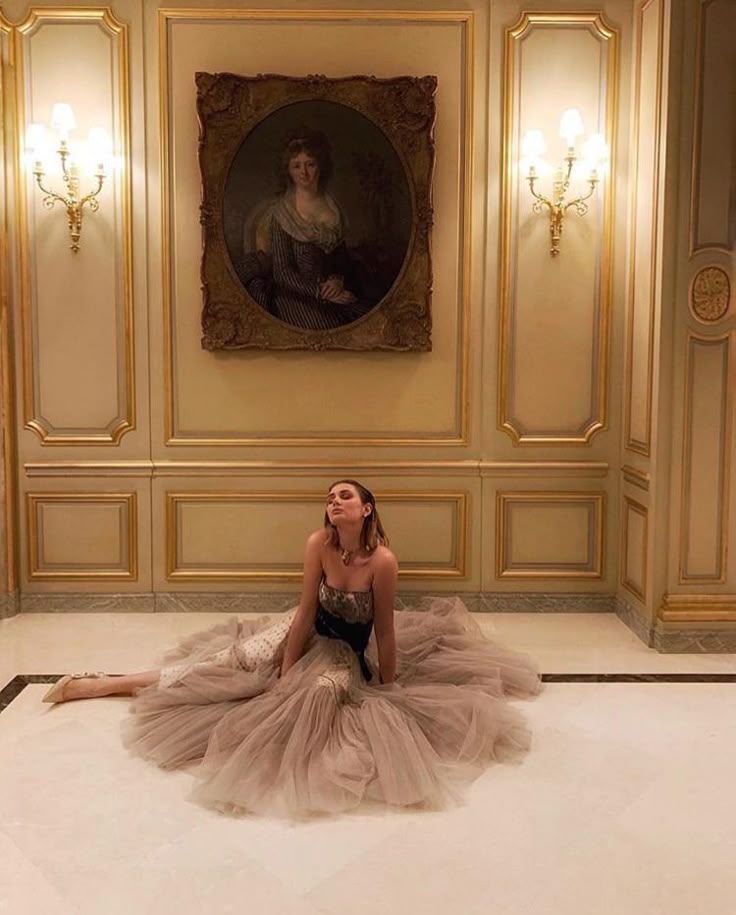
There is a certain energy some women carry that cannot be mimicked, manufactured, or cosmetically applied. It is not charisma. It is not beauty. It is not the polished quiet-luxury aesthetic that modern culture tries to pass off as “old money.”
It is something far older, more architectural, and more deeply embedded in the psyche.
It is ancestral elegance — the embodied calm, self-possession, emotional regulation, and refined presence that come from being shaped by a lineage with generational stability, cultivated values, and a long memory of dignity.
Most women today are taught to chase aesthetics that mimic refinement — neutral palettes, clean lines, soft tones, polished grooming. But true elegance is not a look. It is a lineage-coded energy. It is the result of how a woman was raised, the emotional climate of her family, the stability of her roots, the rituals of her household, the rhythm of the environments she absorbed, and the internalized structure passed down through her maternal and paternal lines.
Elegance is not just personal.
Elegance is ancestral.
This is the part of femininity that the internet never speaks about — because it cannot be bought, downloaded, or copied. But it can be learned, cultivated, and embodied, even by women who did not grow up surrounded by refinement.
Ancestral elegance is the missing dimension of feminine energy.
Elegance Begins Long Before the Woman is Born
A woman’s energy is shaped by the emotional landscape of the women who came before her — her mother, her grandmother, her great-grandmothers, and the matrilineal line that stretches deeper into history than memory can reach.
A lineage with stability produces daughters who are regulated.
A lineage with insecurity produces daughters who are vigilant.
A lineage with cultivation produces daughters who are refined.
A lineage with chaos produces daughters who are hurried.
This is not destiny — it is conditioning.
Upper-class and historically cultivated families pass down:
- slower emotional tempos
- regulated nervous systems
- time-rich environments
- relational security
- consistent modeling of composure
- unspoken rules of social restraint
- boundaries by example, not lecture
- exposure to beauty, art, and culture
- subtle aesthetics encoded through environment
Lower-class or unstable lineages often pass down:
- urgency
- emotional reactivity
- boundary collapse
- hypervigilance
- scarcity thinking
- a survivalist approach to relationships
- chaotic communication
- unpredictable rhythms
- less exposure to refinement
It is this difference that creates the unmistakable aura of women with cultivated lineage — the depth, the calm, the pacing, the gentleness, the presence.
It is not money.
It is inheritance of emotional architecture.
Why Cultivated Lineage Creates a Different Type of Woman
Women from refined lineages tend to move through the world with a specific energy:
- Their shoulders rest downward instead of upward.
- Their breath is deeper.
- Their voices are softer but clearer.
- Their reactions are measured.
- Their energy is unhurried.
- Their eyes remain steady.
- Their gestures have purpose.
- Their presence is contained, never spilling outward.
This is not something they learned from a YouTube etiquette coach.
It is something they absorbed.
When a woman grows up seeing emotional discipline modeled around her — not repression, but refined self-management — she internalizes composure as normal.
When a woman grows up with boundaries modeled as elegance rather than defensiveness, she internalizes self-respect without aggression.
When a woman grows up in spaces that value aesthetic harmony, intellectual conversation, and social grace, she internalizes a slower, more measured rhythm of being.
These qualities form the psychological skeleton of elegance — not the outfit, not the hair, not the makeup.
The internet insists that elegance is about looking “clean,” “minimal,” or “quiet luxury.”
But lineage-coded elegance is about how the nervous system conducts itself.
The Ancestral Nervous System
This is where the deeper truth enters:
Feminine energy is a nervous system state — not an aesthetic.
Women from stable lineages carry:
- lower baseline cortisol
- slower heart-rhythm patterns
- stronger vagal tone
- ease with receiving
- deep internal permission to rest
- a naturally slower pace of speech
- fewer micro-expressions of fear or tension
Women from volatile or chaotic lineages often carry:
- chronic bracing
- faster speech
- shallow breath
- tension around the eyes and mouth
- hyper-awareness of others’ emotions
- difficulty relaxing or receiving
- a high-alert instinct
This nervous system contrast is the difference in aura.
It is why some women feel like lavender and linen and afternoon light — while others feel like readiness, vigilance, and subtle anxiety, no matter how polished they appear.
Again:
This is not destiny.
It is conditioning.
It can be retrained.
But we must first understand the distinction.
Class Coding: The Psychological Grammar of Elegance
Class coding is the subtle, often unconscious psychological programming that shapes how a woman:
- communicates
- paces herself
- self-regulates
- expresses emotion
- sets boundaries
- navigates social settings
- perceives her own worth
- interprets attention
- carries her body
- manages desire
Women raised in lineage-coded environments learn by osmosis:
- don’t rush
- don’t overshare
- don’t perform
- don’t compete for attention
- don’t collapse emotionally
- don’t speak just to fill silence
- don’t chase
- don’t react quickly
- don’t betray your dignity
The feminine that results from this is not submissive — it is sovereign.
It has nothing to prove, no emotional hunger, no desperation.
Her femininity feels rested.
It feels rooted.
It feels whole.
Women without this conditioning are not flawed — they simply did not learn the psychology of elegance through lived experience.
But they can learn it consciously.
Why Women Seek Elegance Now
There is a global feminine craving for:
- slowness
- refinement
- depth
- poise
- grace
- lineage
- meaning
- identity
- sovereignty
- emotional structure
This is because modern culture has become fast, volatile, overstimulated, and emotionally undisciplined. Women are tired of the performative feminine, the aesthetic feminine, the clean-girl feminine, the hyper-independent masculine, and the chaotic feminine.
They want the feminine of lineage.
They want the feminine of heritage.
They want the feminine of self-possession.
This is the renaissance of elegance — not as a trend, but as a return to the psychological stability that women have been deprived of for nearly two generations.
Women Without Lineage Can Still Become Women of Lineage
This is where the Rosewood perspective becomes essential:
You do not need to come from a cultivated lineage to become a cultivated woman.
You can be the first generation.
You can be the beginning of the refinement.
You can be the one who shifts the emotional tone of your descendants.
You can be the woman who rebuilds the inner masculine for all women who come after you.
Lineage begins with one woman who decides:
“My daughters will not inherit the chaos I grew up in.”
“My granddaughters will not inherit my scarcity.”
“My family will not repeat the patterns I am ending.”
This decision alone begins a new class code.
How Ancestral Elegance is Built in the Present
Ancestral elegance is created through:
- emotional discipline
- regulated pacing
- cultivated taste
- self-education
- intentional rituals
- refined communication
- boundaries without reactivity
- solitude without loneliness
- a high-frequency self-concept
- steady inner masculine structure
These do not require privilege.
They require intention.
And intention can accomplish in one generation what ancestry accomplishes in five.
This is the heart of the Rosewood Institute philosophy:
elegance is initiation, not inheritance.
Closing Thoughts: You Are Your Lineage’s Turning Point
Whether you come from aristocratic lines or humble beginnings, you are the culmination of thousands of years of women before you — their choices, wounds, strengths, and instincts live in you.
You are the carrier of their elegance, their untold stories, their unrealized dreams, their unhealed wounds, their buried grace.
And you are the woman who gets to decide:
Will the lineage continue as it has?
Or will it elevate here, with me?
Ancestral elegance is not given.
It is chosen — fiercely, sacredly, and deliberately.
And when a woman chooses it, she becomes not only elegant herself, but the mother of an elegant future.



 ROSEWOOD INSTITUTE
Leave a comment